Dodge 3.6 Firing Order: Complete Guide for Smooth Engine Performance
If you own a Dodge vehicle with the popular 3.6L Pentastar engine, understanding the Dodge 3.6 firing order can help you diagnose engine problems, replace spark plugs correctly, and maintain smooth performance.
Whether you are a DIY mechanic or simply curious about how your engine works, this guide covers everything you need to know in simple language.
The Dodge 3.6 Pentastar engine is used in many vehicles, including the Dodge Charger, Dodge Challenger, Jeep Grand Cherokee, and Chrysler 300.
Because this engine is so common, knowing its firing order is valuable for troubleshooting and maintenance.
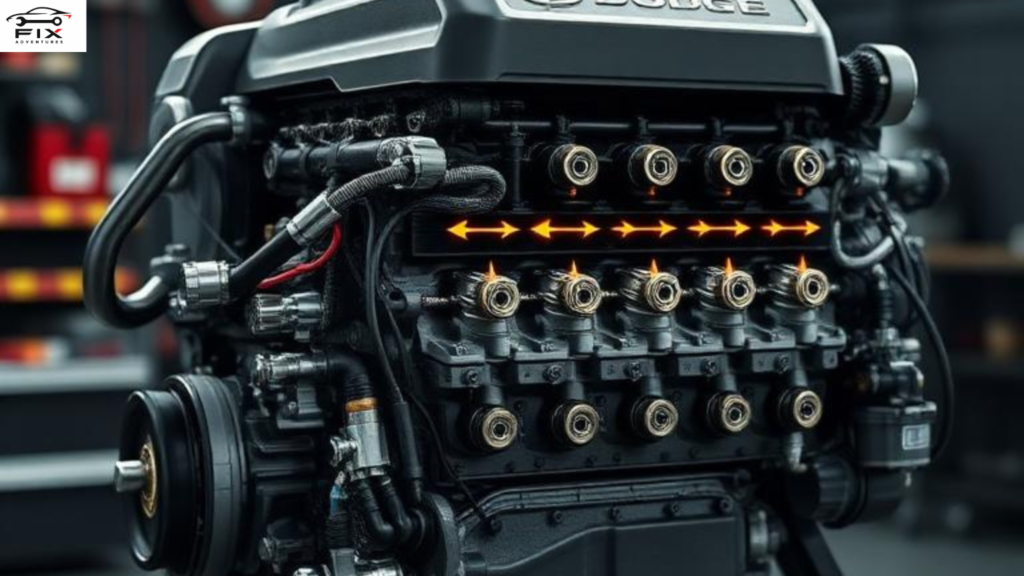
Dodge 3.6 Firing Order
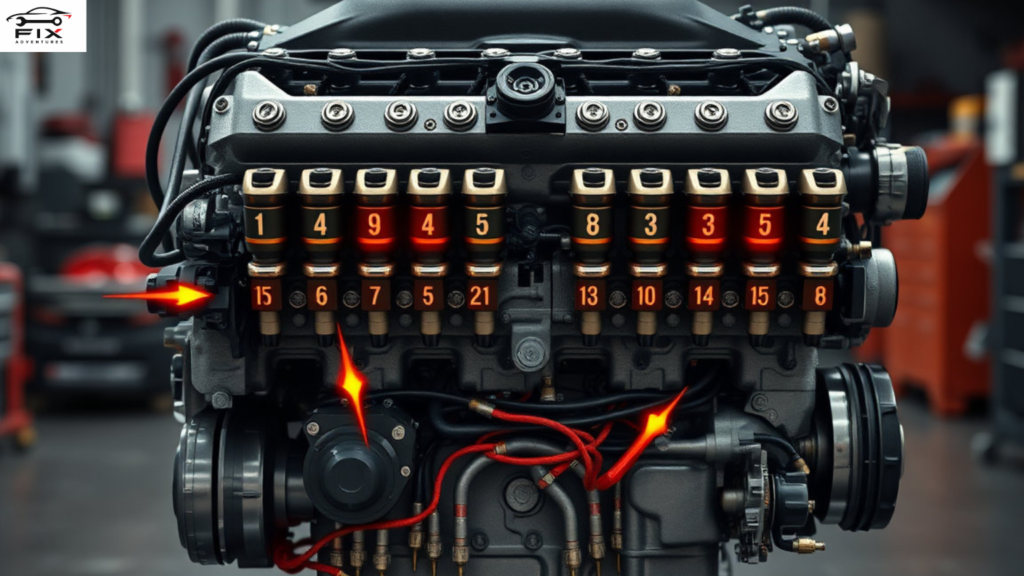
The firing order for the Dodge 3.6L Pentastar engine is:
1−2−3−4−5−6
This means the cylinders fire sequentially from cylinder 1 through cylinder 6.
The engine uses a sophisticated ignition system controlled by the engine computer to deliver smooth acceleration, fuel efficiency, and lower emissions.
What Is a Firing Order?
A firing order is the sequence in which the engine cylinders ignite. Each cylinder’s spark plug fires at a specific time to create combustion. This process generates the power needed to move the vehicle.
The firing order is extremely important because it helps:
- Reduce engine vibration
- Improve fuel efficiency
- Maintain balanced power delivery
- Prevent engine misfires
- Keep engine timing accurate
If the firing order becomes incorrect due to wiring mistakes or ignition issues, the engine may run rough or fail to start.
Dodge 3.6 Cylinder Numbering
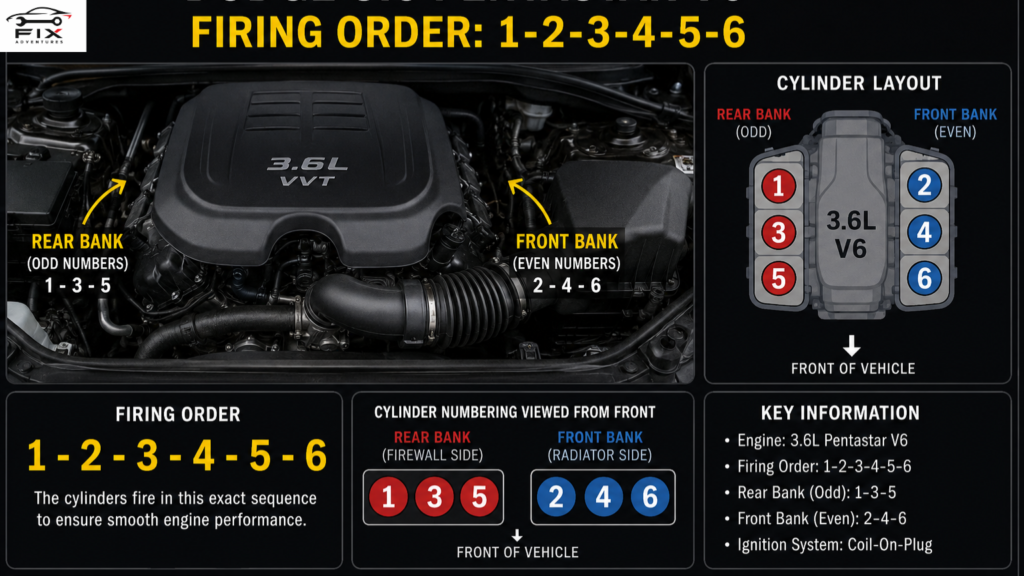
Before working on the firing order, you need to understand cylinder locations.
The Dodge 3.6 Pentastar is a V6 engine with two cylinder banks.
Front Bank (Radiator Side)
The front bank contains:
- Cylinder 2
- Cylinder 4
- Cylinder 6
Rear Bank (Firewall Side)
The rear bank contains:
- Cylinder 1
- Cylinder 3
- Cylinder 5
Here is the basic cylinder layout:
Rear Bank
- 1
- 3
- 5
Front Bank
- 2
- 4
- 6
This numbering arrangement helps mechanics identify ignition coils, injectors, and spark plugs quickly.
Why the Dodge 3.6 Firing Order Matters
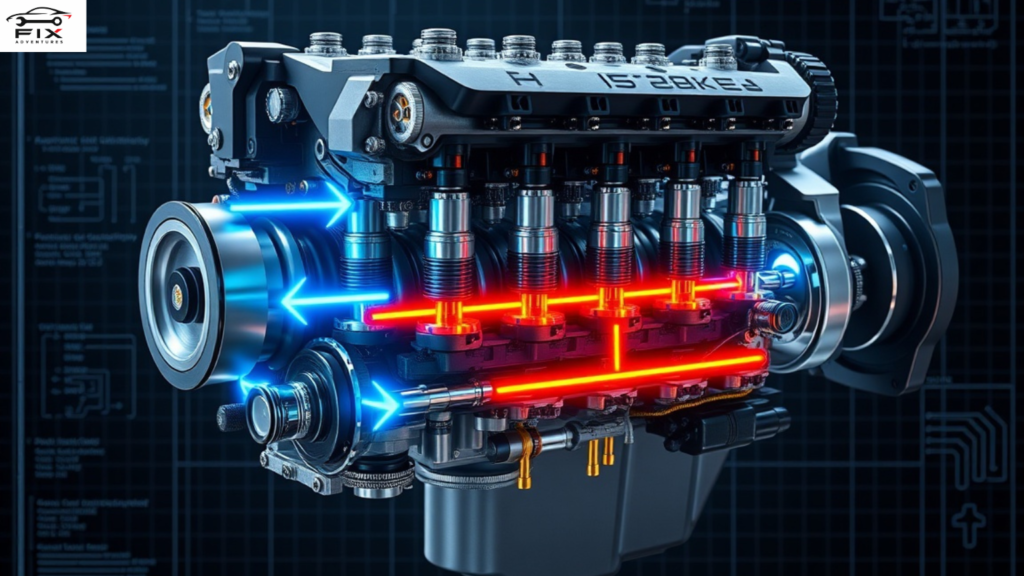
The correct Dodge 3.6 firing order ensures the engine operates efficiently. Modern engines rely heavily on proper timing and combustion balance.
Here are some reasons why it matters:
1. Smooth Engine Operation
A correct firing order prevents excessive vibration and shaking. The engine runs smoother because power pulses are evenly distributed.
2. Better Fuel Economy
Proper combustion timing improves fuel efficiency. Incorrect firing can waste fuel and reduce mileage.
3. Lower Engine Wear
Balanced firing reduces stress on crankshaft components, bearings, and engine mounts.
4. Reduced Misfires
An incorrect ignition sequence can cause cylinders to misfire, triggering the check engine light.
Common Symptoms of Incorrect Firing Order
Although the Dodge 3.6 ignition system is computer-controlled, issues can still happen after repairs or maintenance mistakes.
Here are common signs of firing-order-related problems:
Engine Misfires
The engine may hesitate, shake, or stumble during acceleration.
Rough Idle
A rough idle often indicates ignition timing or coil connection issues.
Check Engine Light
Misfire trouble codes such as:
- P0300
- P0301
- P0302
- P0303It
can appear if cylinders are not firing properly.
Poor Fuel Economy
An incorrect firing sequence can cause incomplete combustion.
Loss of Power
You may notice weak acceleration or sluggish throttle response.
Dodge 3.6 Ignition System Explained
The Dodge 3.6 Pentastar engine uses a coil-on-plug ignition system. Each cylinder has its own ignition coil mounted directly above the spark plug.
This setup provides:
- More accurate spark timing
- Better combustion
- Reduced ignition wire problems
- Improved reliability
Because there are no traditional spark plug wires, firing order issues usually happen from:
- Incorrect coil installation
- Faulty ignition coils
- Damaged connectors
- PCM timing issues
How to Find Cylinder 1 on a Dodge 3.6
Cylinder 1 is located on the rear bank closest to the passenger side.
When standing in front of the engine bay:
- Rear bank = odd-numbered cylinders
- Front bank = even-numbered cylinders
Cylinder 1 is important because many diagnostic procedures reference it directly.
Spark Plug Replacement Tips for Dodge 3.6
If you are replacing spark plugs on the Dodge 3.6 engine, following proper procedures is essential.
Use OEM-Quality Spark Plugs
Cheap spark plugs can cause:
- Misfires
- Poor acceleration
- Reduced fuel economy
Always use manufacturer-recommended plugs.
Replace Ignition Coils Carefully
Disconnect one coil at a time to avoid confusion during reinstallation.
Check Plug Gap
Improper spark plug gaps may lead to ignition issues.
Avoid Over-Tightening
Over-tightening spark plugs can damage cylinder head threads.
Dodge 3.6 Engine Vehicles
The 3.6L Pentastar engine appears in many popular vehicles.
Some examples include:
- Dodge Durango
- Ram 1500
- Jeep Wrangler
- Chrysler Pacifica
Because the engine is widely used, many repair procedures remain similar across models.
How to Diagnose Dodge 3.6 Misfires
Misfires are one of the most common problems associated with ignition systems.
Step 1: Scan for Codes
Use an OBD2 scanner to check for misfire codes.
Examples include:
- P0301 = Cylinder 1 misfire
- P0302 = Cylinder 2 misfire
Step 2: Inspect Ignition Coils
Swap the suspected ignition coil with another cylinder to see if the misfire follows the coil.
Step 3: Check Spark Plugs
Worn spark plugs often cause rough running.
Step 4: Inspect Fuel Injectors
Fuel delivery issues can mimic ignition problems.
Step 5: Perform Compression Test
Low compression may indicate internal engine damage.
Dodge 3.6 Engine Specifications
Here are some quick specs for the Dodge 3.6 Pentastar engine:
| Specification | Details |
|---|---|
| Engine Type | 3.6L V6 |
| Fuel System | Sequential Multi-Port Injection |
| Ignition System | Coil-On-Plug |
| Firing Order | 1-2-3-4-5-6 |
| Valvetrain | DOHC |
| Fuel Type | Gasoline |
The Pentastar engine is known for strong reliability and smooth power delivery.
Can Incorrect Coil Placement Cause Problems?
Yes, although the Dodge 3.6 does not use traditional spark plug wires, incorrectly connected ignition coils or damaged connectors can still create problems.
Possible symptoms include:
- Engine shaking
- Poor acceleration
- Flashing check engine light
- Hard starting
- Increased fuel consumption
Always reconnect components carefully during repairs.
Maintenance Tips for the Dodge 3.6 Engine
Regular maintenance helps keep the engine running smoothly.
Change Spark Plugs on Schedule
Old plugs reduce ignition efficiency.
Use Quality Engine Oil
Clean oil protects internal engine components.
Replace Air Filters
Dirty air filters reduce engine performance.
Monitor Coolant Levels
Overheating can damage ignition and engine components.
Scan for Codes Periodically
Early detection prevents larger repair bills.
Is the Dodge 3.6 Pentastar Reliable?
The Dodge 3.6 Pentastar engine is generally considered reliable when maintained properly.
Owners appreciate it for:
- Good fuel economy
- Smooth performance
- Strong horsepower
- Long lifespan
However, like any engine, regular maintenance is critical.
Some commonly reported issues include:
- Oil cooler leaks
- Misfires
- Ticking noises
- Thermostat problems
Most problems are manageable if caught early.
Frequently Asked Questions
What is the firing order on a Dodge 3.6?
The Dodge 3.6 firing order is:
1−2−3−4−5−6
Which side is cylinder 1 on a Dodge 3.6?
Cylinder 1 is located on the rear bank near the passenger side.
Does the Dodge 3.6 have spark plug wires?
No. The engine uses a coil-on-plug ignition system.
What causes Dodge 3.6 misfires?
Common causes include:
- Bad ignition coils
- Worn spark plugs
- Fuel injector issues
- Vacuum leaks
- Low compression
Is the Pentastar engine good?
Yes, the 3.6 Pentastar is widely regarded as a dependable and efficient V6 engine.
Final Thoughts
Understanding the Dodge 3.6 firing order is important for diagnosing ignition problems, replacing spark plugs, and maintaining proper engine performance. The Pentastar V6 uses a straightforward firing sequence of:
1−2−3−4−5−6
Combined with its coil-on-plug ignition system, this setup delivers smooth power, strong reliability, and efficient operation across many Dodge, Jeep, Ram, and Chrysler vehicles.
If your engine develops misfires, rough idle, or poor performance, checking ignition components and understanding cylinder locations can save time and repair costs.

If you’ve ever found yourself staring at your car, wondering what went wrong or how to fix it without spending a fortune, you’re in the right place. FixAdventures was built for people who want practical, honest, and easy-to-understand car repair advice — without the fluff or confusing jargon.