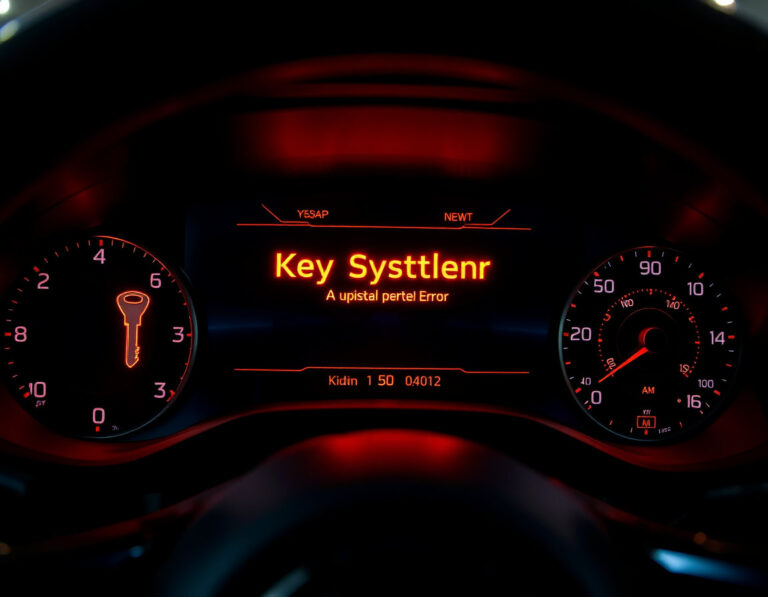
Run Flat Indicator Inoperative: Causes, Symptoms, Fixes, and Repair Costs
Seeing the “Run Flat Indicator Inoperative” warning on your car’s dashboard can be confusing, especially if your tires appear to be in good condition. This message usually means the vehicle’s tire pressure monitoring or flat-tire detection system is not working correctly. As a result, your car may be unable to warn you reliably when a tire loses pressure.
The warning is commonly associated with BMW vehicles and other cars equipped with a run-flat tire monitoring system. Depending on the vehicle’s design, the problem may involve a tire pressure sensor, wheel-speed sensor, system calibration, electrical fault, or incorrect tire pressure.
The good news is that this warning does not automatically mean you have a flat tire or need to replace your tires. However, it should not be ignored because you may lose an important safety feature.
In this guide, you’ll learn what the run flat indicator inoperative warning means, its common causes, how to fix it, how much repairs may cost, and when you should visit a mechanic.
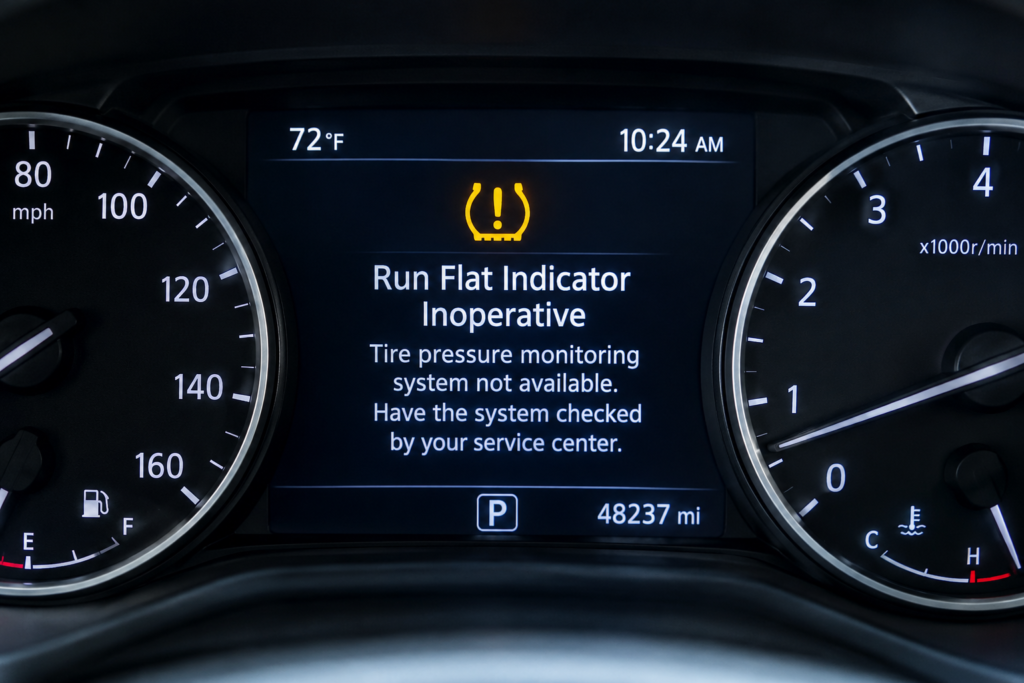
What Does Run Flat Indicator Inoperative Mean?
The run flat indicator inoperative warning means your vehicle’s system for detecting or reporting tire pressure loss is unavailable or has detected a malfunction.
On some BMW models, the system estimates tire pressure loss by comparing wheel rotation speeds through the anti-lock braking system (ABS) sensors. When one tire loses pressure, its rolling circumference changes, causing it to rotate differently from the other wheels.
Other vehicles use direct tire pressure monitoring systems (TPMS), which measure tire pressure using sensors installed inside the wheels.
When the monitoring system cannot operate correctly, the dashboard may display a warning.
Does This Mean You Have a Flat Tire?
Not necessarily. The warning indicates a monitoring-system problem rather than confirming that a tire is flat.
Your tires could have normal pressure while the system itself is malfunctioning. However, a tire may also be losing pressure without the system being able to alert you.
For this reason, manually check all four tires before assuming the warning is harmless.
Can You Still Drive With This Warning?
You may be able to drive a short distance if all tires are properly inflated and there are no signs of damage. However, your tire pressure monitoring protection may be unavailable.
Before driving, inspect the tires and check their pressure with a reliable gauge. If a tire looks flat, has visible damage, or loses pressure quickly, do not continue driving on it.
Remember that run-flat tires are not designed to make every puncture safe. Their ability to support the vehicle after losing pressure depends on the tire manufacturer’s specifications, the extent of damage, and the vehicle’s requirements.
Common Causes of the Run Flat Indicator Inoperative Warning
Several issues can trigger this dashboard message. Identifying the actual cause is important because resetting the system will not repair a damaged sensor or electrical component.
1. Incorrect Tire Pressure
Incorrect tire pressure is one of the first things you should check when this warning appears.
If one or more tires are underinflated or overinflated, the system may need to be recalibrated after the pressure has been corrected.
How to Fix It
- Park your vehicle on a safe, level surface.
- Check the pressure of all four tires when they are cold.
- Compare the readings with the recommended pressures listed on the driver’s door-jamb sticker or in the owner’s manual.
- Inflate or deflate the tires as necessary.
- Reset or initialize the tire monitoring system according to your vehicle’s instructions.
Do not use the maximum pressure printed on the tire sidewall as your normal target unless your vehicle manufacturer specifically instructs you to do so.
2. Faulty ABS or Wheel-Speed Sensor
Some vehicles use the ABS wheel-speed sensors to detect changes in tire rotation. If one sensor stops working or sends inaccurate information, the flat-tire detection system may become unavailable.
A faulty sensor can also trigger an ABS or traction-control warning.
Signs of a Faulty Sensor
- The run flat indicator warning appears repeatedly.
- The ABS warning light comes on.
- The traction-control system behaves unusually.
- A diagnostic scan identifies a wheel-speed sensor fault.
How to Fix It
A mechanic should scan the vehicle’s control modules and inspect the sensor, wiring, connectors, and related components. If the sensor is defective, replacement may be necessary.
Avoid replacing a sensor based on the dashboard message alone. Diagnostic testing can help identify the affected wheel and prevent unnecessary repairs.
3. Tire Pressure Monitoring Sensor Failure
Vehicles equipped with direct TPMS use electronic sensors to measure tire pressure. These sensors are often installed inside the wheels and may have batteries that eventually lose their charge.
A failed sensor may stop transmitting pressure information to the vehicle.
Common Symptoms
- Tire pressure readings are missing.
- The TPMS warning remains illuminated.
- The system cannot complete initialization.
- A diagnostic tool reports a sensor communication or battery fault.
How to Fix It
A technician can use a compatible TPMS tool to test each sensor. If a sensor has failed, it may need to be replaced and programmed or relearned by the vehicle.
Not every run-flat indicator system uses direct pressure sensors, so first confirm which system your vehicle has.
4. The Tire Monitoring System Needs Resetting
Sometimes the warning appears after routine maintenance rather than a mechanical failure.
For example, you may see it after:
- Changing one or more tires.
- Adjusting tire pressure.
- Rotating the wheels.
- Installing a new set of tires.
- Replacing a wheel or tire sensor.
If the vehicle’s monitoring system has not been initialized correctly, it may not recognize the current tire conditions.
How to Reset the System
The exact procedure varies by model and year. On many BMW vehicles, you can find the relevant function in the vehicle settings under a menu labeled Vehicle Status, Tire Pressure Monitor, or Flat Tire Monitor.
A typical process involves correcting tire pressure, selecting the appropriate monitoring function, and starting the reset or initialization procedure.
Some vehicles require driving under specific conditions before the calibration finishes.
Always follow the instructions in your owner’s manual. If the reset fails or the warning returns, the vehicle may have a fault that requires diagnosis.
5. Damaged Wiring or Electrical Connections
The monitoring system depends on reliable electrical connections. Damaged wiring, corroded connectors, loose connections, or moisture intrusion can interrupt communication between sensors and control modules.
This problem may occur after tire replacement, wheel repairs, suspension work, or exposure to road debris.
How to Fix It
A qualified technician should inspect the relevant wiring harnesses and connectors. Depending on the vehicle, testing may include checking electrical continuity, connector condition, sensor signals, and power supply.
Replacing components without inspecting the wiring can lead to unnecessary expenses.
6. Low Battery Voltage
A weak vehicle battery or charging-system problem can sometimes cause temporary electronic warnings.
If the message appeared after a difficult engine start, a battery replacement, or a period of low battery charge, checking the electrical system may be worthwhile.
However, low voltage should not be assumed to be the cause without testing.
A mechanic can test the battery, alternator, and relevant fault codes to determine whether voltage problems contributed to the warning.
7. Incorrect Tires or Wheel Sizes
Installing tires or wheels that do not match the manufacturer’s approved specifications can sometimes interfere with tire monitoring, especially in systems that compare wheel rotation speeds.
Different tire sizes, mismatched rolling circumferences, or unsuitable combinations of tires may cause problems.
Check the approved tire sizes and fitment requirements in your owner’s manual. If the warning appeared immediately after changing wheels or tires, tell the technician about the recent work.
How to Fix the Run Flat Indicator Inoperative Warning
If you want to resolve the warning efficiently, follow a logical troubleshooting process rather than replacing parts immediately.
Step 1: Inspect All Tires
Look for punctures, cuts, bulges, uneven wear, or visibly low tires. Check the pressure of every tire with a pressure gauge.
If you find a damaged tire, have it assessed by a qualified tire professional.
Step 2: Correct the Tire Pressure
Inflate the tires to the recommended cold pressure for your vehicle and its load conditions. The correct values are usually shown on the driver’s door-jamb sticker or in the owner’s manual.
Do not rely solely on visual inspection because an underinflated tire can appear normal.
Step 3: Reset the Monitoring System
After confirming that the tires are safe and correctly inflated, perform the reset procedure specified by your manufacturer.
Allow sufficient time or driving distance for initialization if your vehicle requires it.
Step 4: Check for Other Dashboard Warnings
Look for additional warning lights, especially those related to ABS, traction control, or stability control.
Multiple warnings can help a technician identify a shared sensor, wiring, or control-module problem.
Step 5: Scan the Vehicle for Fault Codes
If the warning remains, use a diagnostic scanner that supports your vehicle’s relevant systems. A basic engine-code reader may not access the ABS or tire monitoring modules.
The stored codes and live sensor data can help narrow down the cause.
Step 6: Repair the Confirmed Fault
Depending on the diagnosis, the repair may involve correcting tire pressure, replacing a faulty sensor, repairing wiring, addressing a battery problem, or performing a required system initialization.
After repairs, clear the relevant fault codes if appropriate and verify that the system operates normally.
How Much Does It Cost to Fix a Run Flat Indicator Inoperative Warning?
Repair costs depend on the vehicle, the monitoring system, labor rates, and the faulty component. The following figures are rough estimates in US dollars, not guaranteed quotes.
| Possible repair | Estimated cost |
|---|---|
| Tire pressure check and adjustment | $0–$30 |
| System reset or initialization | $0–$100 |
| Diagnostic scan | $40–$150 |
| TPMS sensor replacement | $50–$200 per wheel |
| ABS wheel-speed sensor replacement | $100–$350 per wheel |
| Wiring or connector repair | $50–$250 |
| Battery replacement, if required | $100–$350 |
These ranges can vary substantially, and luxury vehicles may cost more to repair. Some estimates include parts and labor, while others may cover only part of the job.
In Pakistan, prices will also depend on the vehicle model, parts availability, workshop expertise, and whether the component is genuine or aftermarket. Request a diagnosis and itemized quote before approving a repair.
A simple pressure correction or reset may resolve the issue at little or no cost, so it is sensible to start with the basic checks.
Is the Run Flat Indicator the Same as the TPMS Warning?
Not always. These systems serve a similar purpose, but they do not necessarily work in the same way.
Run Flat Indicator
A run-flat indicator may use wheel-speed information from the ABS system to identify changes in tire rolling circumference. It typically detects a potential pressure loss indirectly.
Tire Pressure Monitoring System
A direct TPMS measures pressure using sensors installed in the tires or wheels. Some vehicles also use indirect monitoring systems that estimate pressure loss through wheel-speed differences.
The dashboard wording depends on the vehicle manufacturer and its monitoring technology.
Understanding which system your vehicle uses is important because the diagnosis and repair procedures can be different.
How to Prevent the Warning From Returning
Regular maintenance can help keep your tire monitoring system working correctly.
Check Tire Pressure Monthly
Check the pressure at least once a month and before long journeys. Cold tire measurements generally provide the most useful comparison with the manufacturer’s recommended values.
Inspect Tires Regularly
Look for uneven tread wear, punctures, cuts, and sidewall bulges. Have suspicious damage inspected before driving long distances.
Use Approved Tire Sizes
When replacing tires, follow the vehicle manufacturer’s specifications for size, load rating, speed rating, and compatibility.
Reset the System After Necessary Changes
Follow the manufacturer’s instructions after adjusting tire pressure or performing maintenance that requires recalibration.
Investigate Repeated Warnings
If the same message returns after a successful reset, do not keep resetting it without investigating the cause. Repeated warnings may indicate a sensor, electrical, or other system fault.
Frequently Asked Questions
1. Can I Drive With a Run Flat Indicator Inoperative Warning?
You may be able to drive cautiously if all tires have been checked, their pressures are correct, and there is no visible damage. However, the monitoring system may not alert you to a developing pressure loss. Arrange a repair as soon as practical.
2. Does the Warning Mean My Run-Flat Tires Are Damaged?
No. The message usually indicates that the monitoring system is unavailable or malfunctioning. The tires may be fine, but they still need to be checked manually.
3. Will Resetting the System Remove the Warning?
A reset may clear the warning if the cause was incorrect initialization or a condition that has already been corrected. If a sensor, wiring component, or other system part is faulty, the warning may return.
4. Can a Weak Car Battery Cause This Warning?
Yes, low voltage can contribute to electronic system faults in some vehicles. However, the battery should be tested rather than replaced based only on this message.
5. Is It Expensive to Repair?
Not necessarily. A pressure adjustment or reset may be inexpensive. Sensor replacement, wiring repairs, and ABS-related problems can cost more. An accurate diagnosis is the best way to avoid unnecessary spending.
6. Why Does the Warning Appear After Changing Tires?
The system may need to be reinitialized, or the replacement tires may not match the approved specifications. A damaged sensor or wiring connection is also possible, particularly if the warning started immediately after the work.
Final Thoughts
The run flat indicator inoperative warning means your vehicle’s tire monitoring or flat-tire detection system may not be functioning correctly. It does not automatically mean that a tire is flat, but it does mean you should not rely entirely on the dashboard to monitor tire pressure.
Start by checking all tires manually, correcting their pressure, and following the manufacturer’s reset procedure. If the message remains, have the vehicle scanned for fault codes and inspect the relevant sensors, wiring, and electrical components.

If you’ve ever found yourself staring at your car, wondering what went wrong or how to fix it without spending a fortune, you’re in the right place. FixAdventures was built for people who want practical, honest, and easy-to-understand car repair advice — without the fluff or confusing jargon.